Metal waste is one of the most recyclable materials in the world, yet large amounts of scrap metal still end up in landfill sites every year. Proper metal waste collection plays a major role in reducing environmental pollution, conserving natural resources, and supporting sustainable waste management recycling practices.
From households to construction sites and industrial businesses, metal waste is generated daily in the form of aluminum cans, steel products, copper wires, old appliances, and machinery parts. Instead of disposing of these materials as general waste, responsible metal recycling collection helps recover valuable resources that can be reused again and again.
Why Metal Recycling Collection Is Important
Unlike many other materials, metals can often be recycled multiple times without losing their quality. This makes metal recycling one of the most efficient and environmentally friendly recycling processes available today.
Reduces Landfill Waste
Proper metal waste collection prevents scrap materials from occupying landfill space and reduces environmental contamination.
Conserves Natural Resources
Recycling metal reduces the need for mining raw materials, helping preserve natural resources and reduce energy consumption.
Saves Energy
Manufacturing products from recycled metal requires significantly less energy compared to producing new metal from raw ore.
Supports a Circular Economy
Metal recycling collection helps create a sustainable recycling cycle where materials are reused instead of discarded.
Common Types of Recyclable Metal Waste
Many types of metal materials can be recycled through professional waste management recycling services, including:
- Aluminum cans
- Copper wires
- Steel materials
- Iron scrap
- Old household appliances
- Metal furniture
- Construction and demolition metal waste
- Industrial machinery parts
Proper sorting and collection help improve recycling efficiency and reduce contamination during the recycling process.
How Metal Waste Collection Works
Modern waste management recycling systems make metal recycling collection easier and more organized for homes and businesses.
Collection
Metal waste is collected from residential, commercial, or industrial locations.
Sorting
Different metals are separated into categories such as ferrous and non-ferrous metals.
Processing
Collected metals are cleaned, compacted, and prepared for recycling facilities.
Reuse
Recycled metal is used to manufacture new products, reducing the demand for raw material extraction.
How Golden Recycling Supports Waste Management Recycling
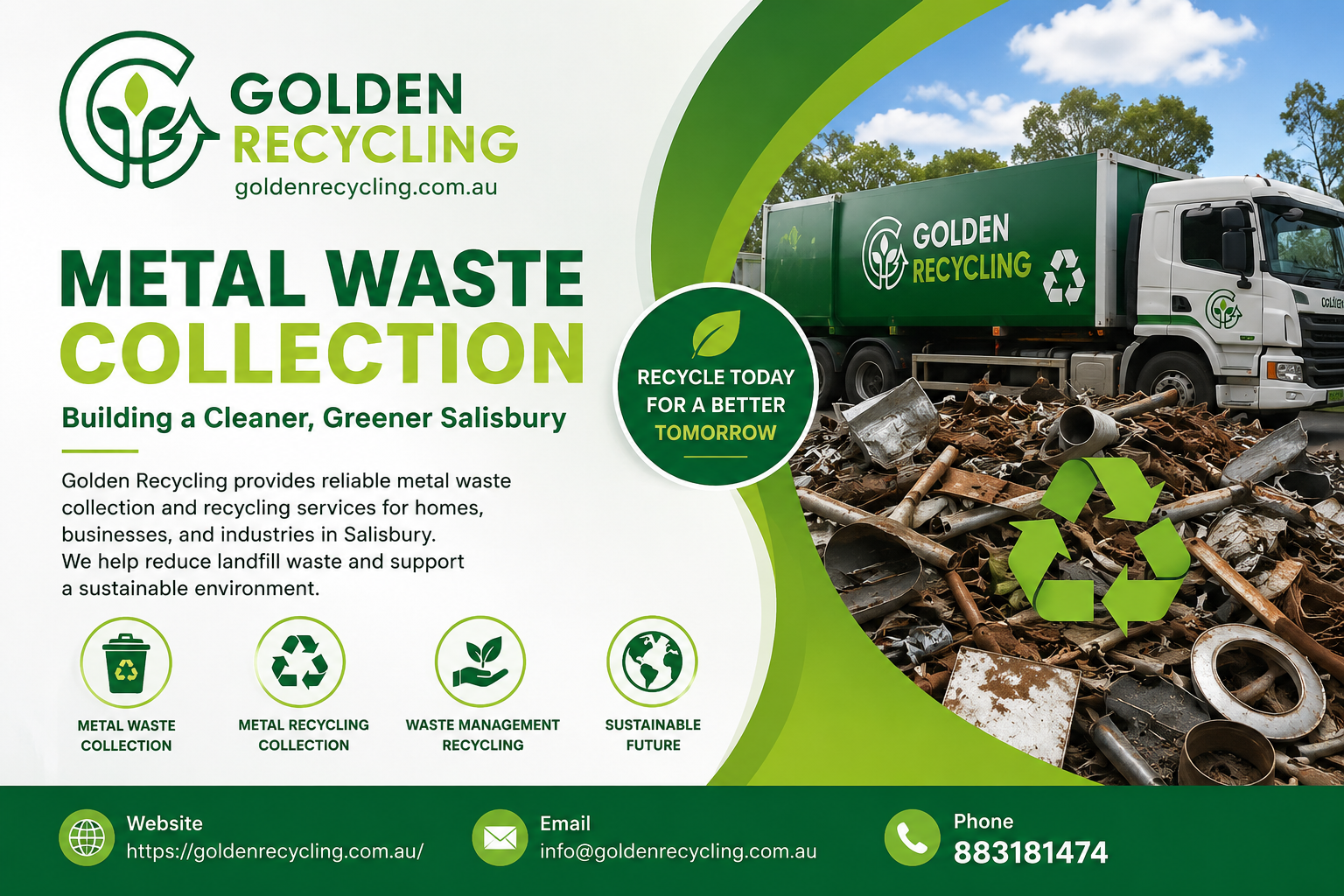
Golden Recycling provides professional metal waste collection and recycling services in Salisbury. Our goal is to help businesses and households recycle metal responsibly while promoting cleaner and greener communities.
We focus on efficient waste management recycling solutions that help reduce landfill waste and improve recycling practices across Salisbury. Our metal recycling collection services support residential customers, tradespeople, contractors, and commercial businesses looking for reliable recycling solutions.
Tips for Better Metal Recycling
- Separate metal waste from general garbage
- Keep recyclable metal clean and dry
- Sort aluminum, copper, steel, and iron separately if possible
- Avoid mixing hazardous waste with recyclable materials
- Use professional recycling collection services for large metal waste
The Future of Waste Management Recycling
As environmental awareness continues to grow, metal recycling collection is becoming increasingly important for sustainable waste management. Recycling metal not only protects the environment but also supports resource conservation and energy efficiency.
With smarter recycling systems and responsible waste disposal habits, communities can significantly reduce pollution and build a cleaner future for the next generation.
Contact Golden Recycling
Website: https://goldenrecycling.com.au/
Email: info@goldenrecycling.com.au

Leave A Comment