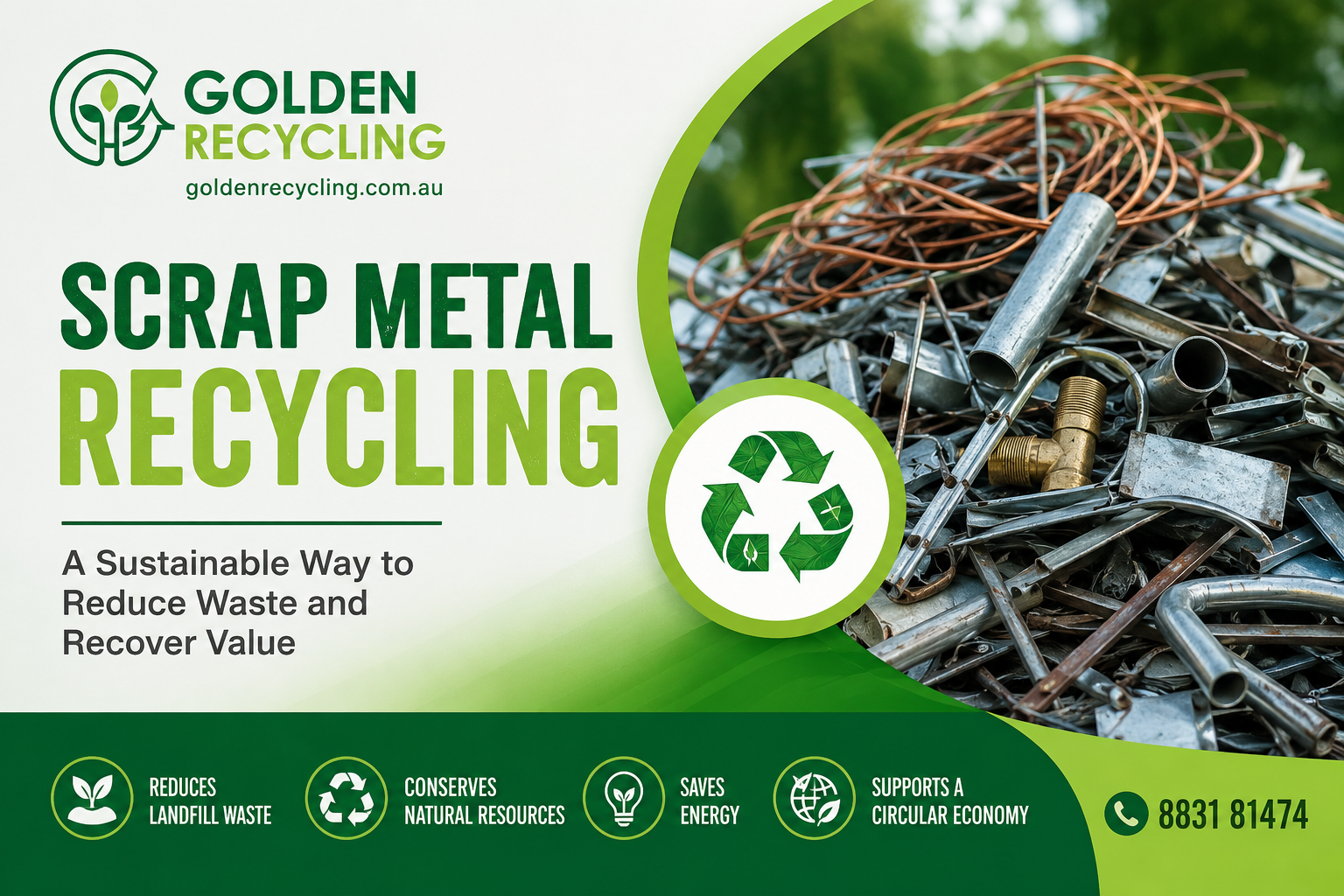
Scrap metal is found in homes, construction sites, workshops, manufacturing facilities, vehicles, appliances, and commercial properties across Australia. When these materials are no longer needed, throwing them away can lead to unnecessary landfill waste and the loss of valuable resources.
Scrap metal recycling provides a smarter alternative. By collecting, sorting, processing, and reusing unwanted metals, businesses and households can help conserve natural resources, reduce waste, and support a more sustainable circular economy.
Whether you have old steel, aluminium, copper, brass, stainless steel, or other unwanted metal items, responsible recycling can give these materials a new life.
What Is Scrap Metal Recycling?
Scrap metal recycling is the process of collecting unwanted metal products and recovering the materials so they can be processed and used again. Instead of sending valuable metals to landfill, recycling facilities sort and prepare them for further processing and manufacturing.
Common sources of scrap metal include:
- Old machinery and equipment
- Construction and demolition materials
- Metal pipes and fittings
- Electrical wiring and cables
- Old vehicles and automotive parts
- Household appliances
- Aluminium products and cans
- Steel and iron materials
- Copper and brass items
- Manufacturing and industrial offcuts
Many metals can be recycled repeatedly without losing their fundamental properties, making them valuable materials within a circular economy.
Why Is Scrap Metal Recycling Important?
1. Reduces Landfill Waste
Large quantities of unwanted metal can take up valuable space when sent to landfill. Recycling scrap metal helps divert recyclable materials away from disposal sites and keeps useful resources in circulation.
For households, tradespeople, construction companies, and industrial businesses, responsible metal recycling is an effective way to manage unwanted materials while reducing overall waste.
2. Conserves Natural Resources
Producing new metal from raw materials requires the extraction and processing of natural resources. Recycling existing metal reduces the need to rely entirely on newly mined materials.
By recovering and reusing scrap metal, recycling helps support more efficient resource use and reduces the pressure placed on natural resources.
3. Helps Save Energy
Producing metals from recycled materials can require significantly less energy than producing metal from virgin raw materials. The energy savings can vary depending on the type of metal and the recycling process, but metal recycling remains an important part of more resource-efficient manufacturing.
4. Supports a Circular Economy
A circular economy focuses on keeping materials in use for as long as possible. Instead of following a traditional “use and dispose” model, recycling helps recover valuable resources and return them to the supply chain.
Scrap metal recycling supports this approach by transforming unwanted materials into valuable raw materials for future products and manufacturing processes.
Common Types of Scrap Metal That Can Be Recycled
Different types of metal have different properties and values. Scrap metal is generally divided into two main categories: ferrous metals and non-ferrous metals.
Ferrous Metals
Ferrous metals contain iron and are commonly used in construction, manufacturing, vehicles, machinery, and infrastructure.
Examples include:
- Steel
- Cast iron
- Mild steel
- Structural steel
- Automotive steel components
Ferrous scrap is commonly recovered from old machinery, construction materials, vehicles, appliances, and industrial equipment.
Non-Ferrous Metals
Non-ferrous metals do not contain significant amounts of iron and are often valued for their durability, conductivity, corrosion resistance, or other unique properties.
Common examples include:
- Copper
- Aluminium
- Brass
- Stainless steel
- Lead
- Zinc
Copper wiring, aluminium products, brass fittings, and stainless-steel items are examples of materials that may be suitable for recycling, depending on their condition and composition.
How Does Scrap Metal Recycling Work?
The recycling process generally involves several important stages.
Step 1: Collection
Unwanted metal is collected from homes, businesses, construction sites, workshops, factories, and other locations.
Step 2: Sorting
The collected material is sorted according to its type, composition, and characteristics. Separating different metals helps ensure that each material can be processed appropriately.
Step 3: Processing
Scrap metal may be cut, compacted, shredded, or otherwise prepared for further processing. The exact process depends on the type and condition of the material.
Step 4: Separation
Additional sorting and separation may be used to remove unwanted materials and improve the quality of the recyclable metal.
Step 5: Reprocessing
Once prepared, recycled metal can be supplied as a raw material for manufacturing and other industrial applications.
This process helps transform unwanted scrap into a resource that can continue to support the production of new products.
Scrap Metal Recycling for Homes and Businesses
Scrap metal recycling is not limited to large industrial companies. Households, tradespeople, builders, manufacturers, workshops, and commercial businesses can all benefit from responsible recycling.
For Homeowners
Home renovations, garage cleanouts, property maintenance, and appliance replacements can generate unwanted metal. Recycling these items can help clear space while keeping recyclable materials out of landfill.
For Tradespeople
Plumbers, electricians, builders, mechanics, and other tradespeople often produce metal offcuts and leftover materials during projects. Separating and recycling these materials can improve waste management on job sites.
For Construction Companies
Construction and demolition projects can generate significant amounts of steel, aluminium, copper, and other metal materials. Recycling these resources can support more sustainable project waste management.
For Industrial and Commercial Businesses
Manufacturing facilities, workshops, warehouses, and industrial sites may regularly produce metal offcuts, machinery components, and other scrap materials. A reliable scrap metal recycling process can help businesses manage these materials more efficiently.
Why Choose Professional Scrap Metal Recycling?
Working with an experienced recycling provider can make the process easier and more efficient. Professional recyclers can help identify recyclable materials, sort different types of scrap, and ensure that materials are handled responsibly.
A professional approach can help businesses and households:
- Reduce unnecessary waste
- Recover valuable recyclable materials
- Improve site organisation
- Support environmentally responsible disposal
- Contribute to a more sustainable recycling system
Australia’s waste and recycling sector continues to place importance on responsible resource recovery and improved waste management practices.
Recycle Your Scrap Metal Responsibly with Golden Recycling
Unwanted metal does not have to become landfill waste. Through responsible scrap metal recycling, valuable materials can be recovered, processed, and returned to productive use.
Whether you are clearing out household items, managing construction waste, removing old equipment, or handling ongoing commercial scrap, choosing a reliable recycling provider can make the process easier and more sustainable.
At Golden Recycling, we help customers manage recyclable materials responsibly and support better resource recovery practices. If you have unwanted metal and want to learn more about responsible recycling options, get in touch with our team today.

Leave A Comment